Breeding Station
Captive-breeding and assurance-population operations across freshwater, brackish, and saltwater systems. Every zone runs its own water chemistry; every change is driven by the AquaLink mesh, not the calendar. Curated against the Universal Marine Registry.
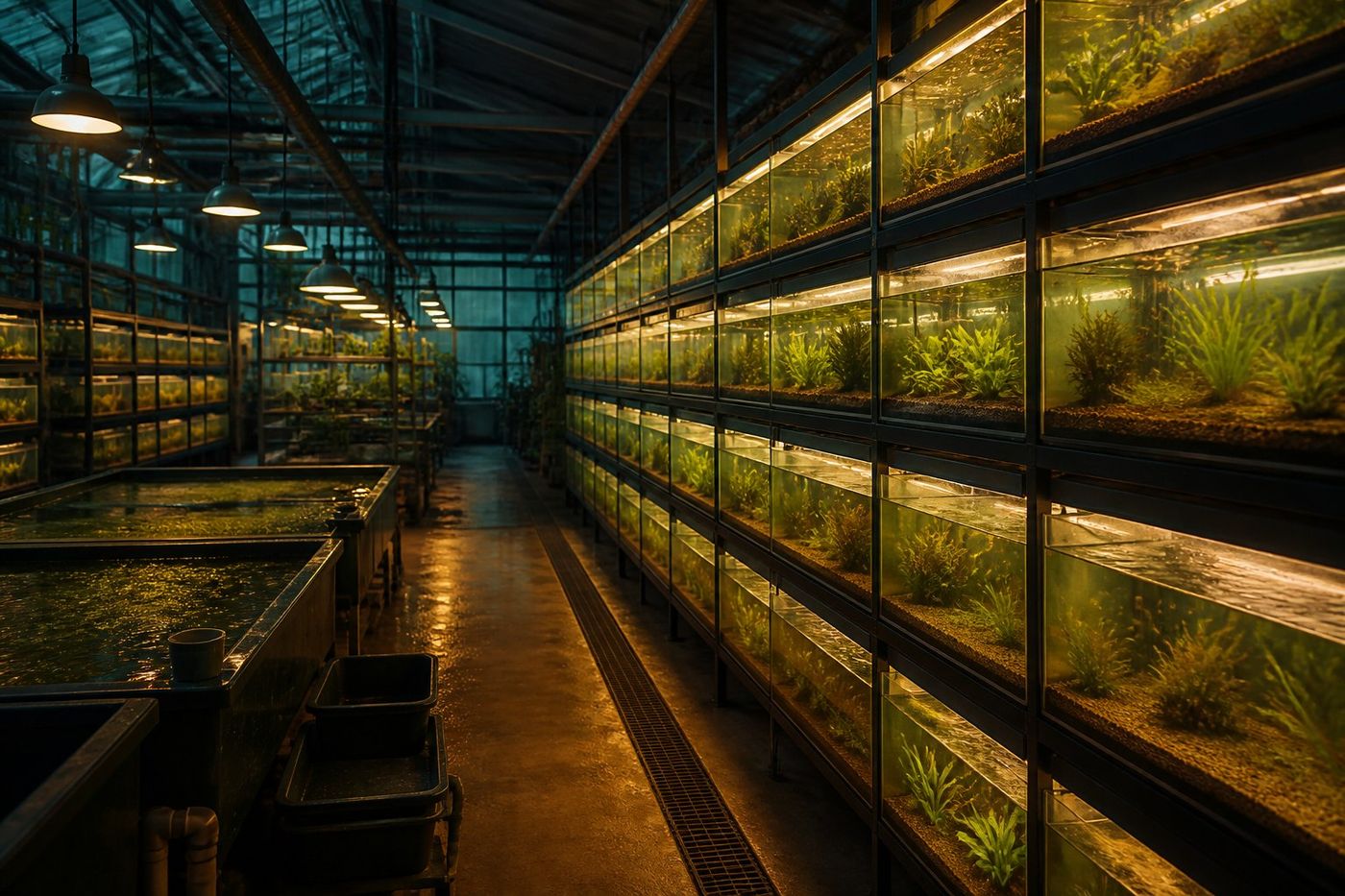
Mission
We hold assurance populations — living insurance against extinction — for species the surface world has abandoned. Wild-type genetics are preserved, bred true, and returned to restored waters under the Registry's authority. The Station is not a zoo. It is a seed vault that breathes.
Culture Zones
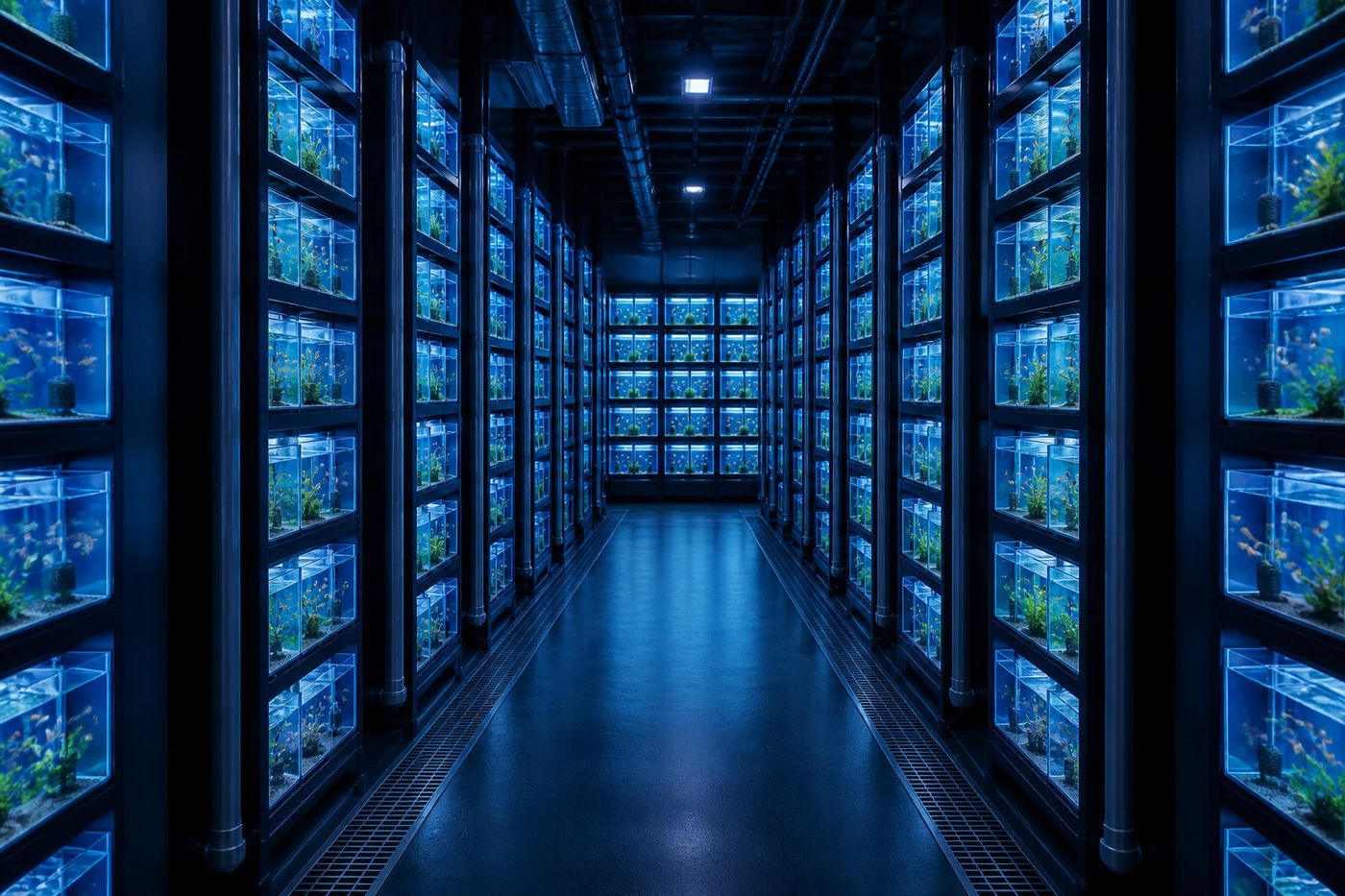
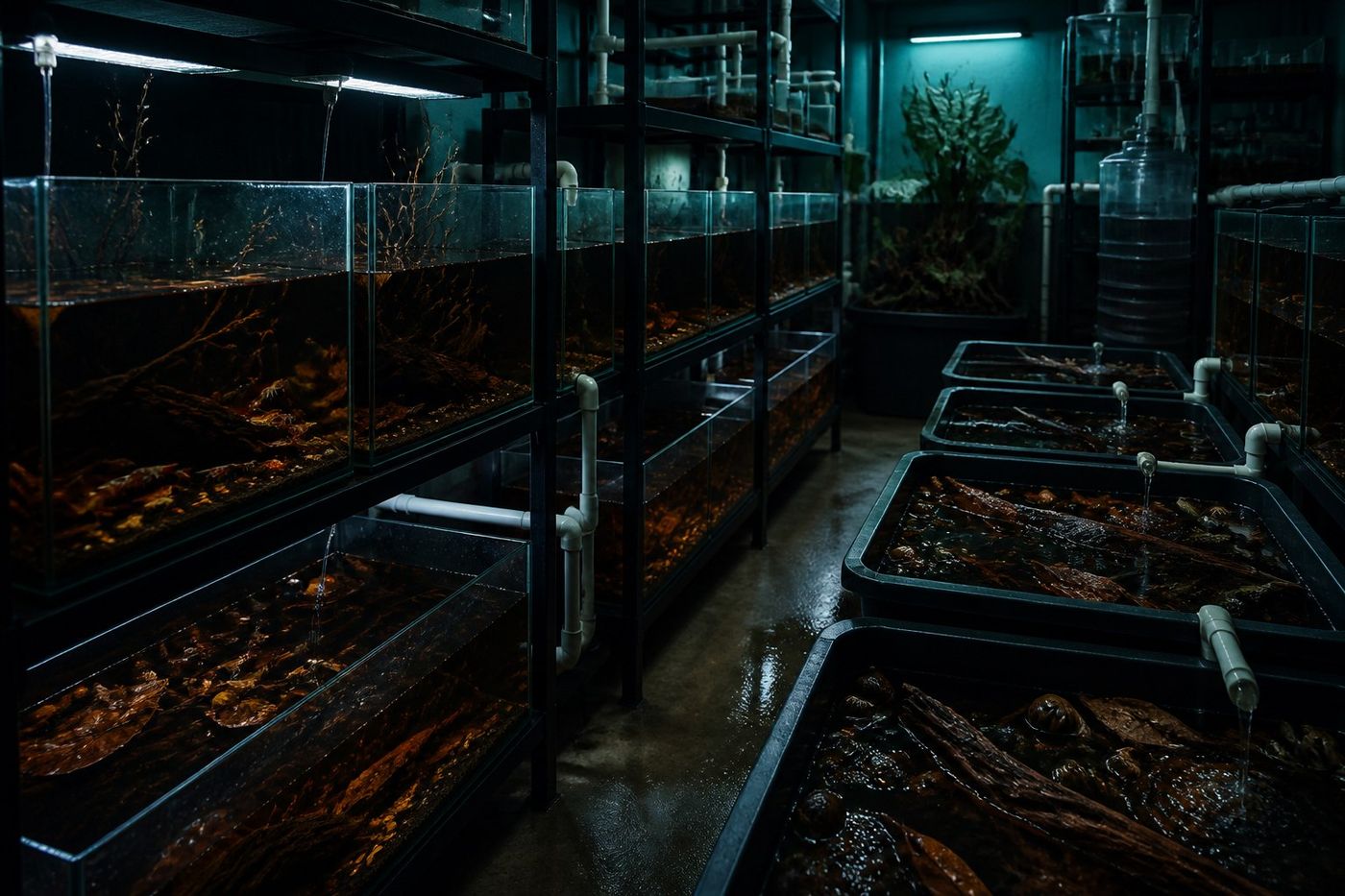
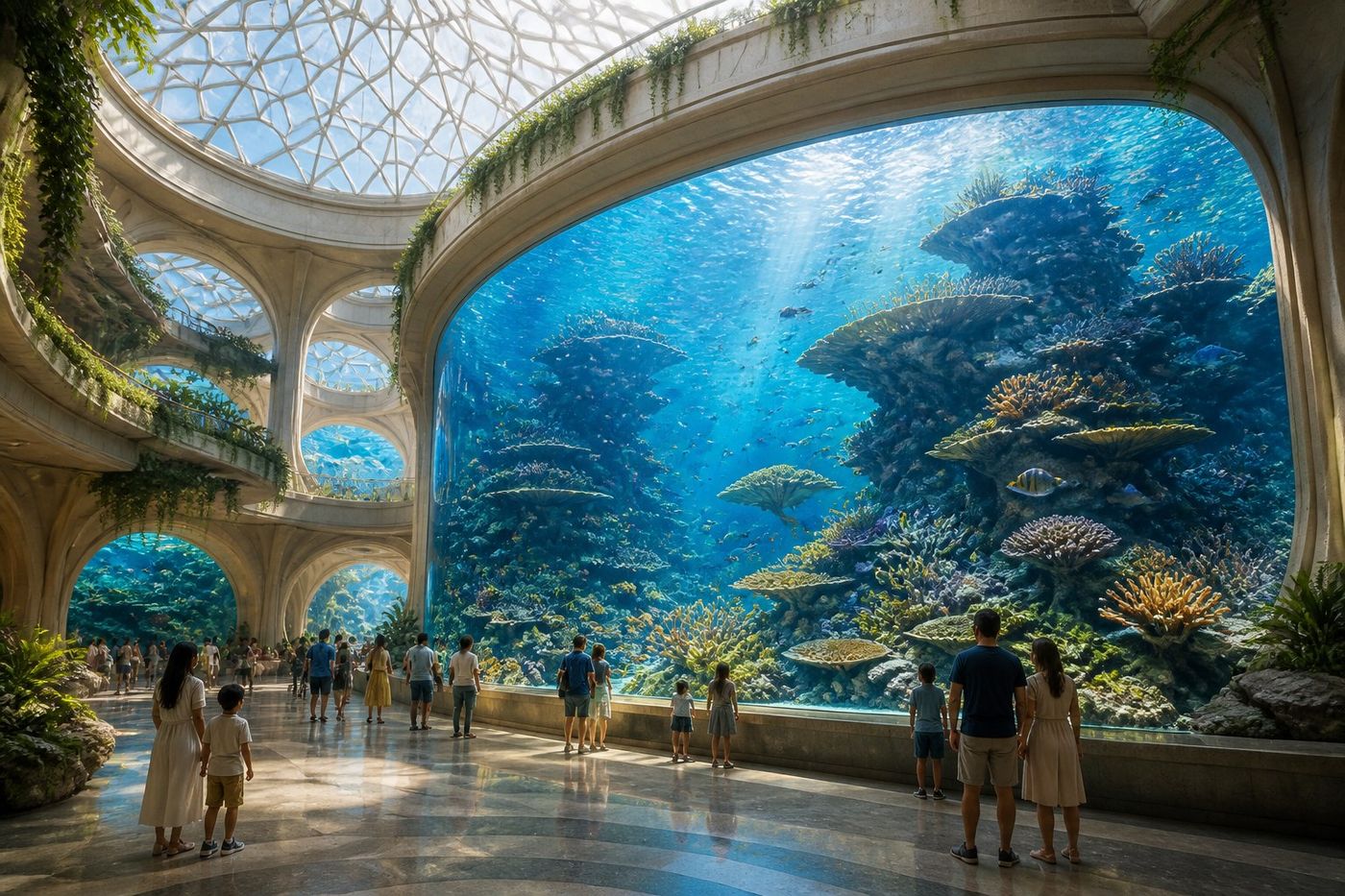
Cichlid Hall
Rift-lake and riverine cichlids — hard-water and soft-water lines held apart. Target: Rift Lake assurance lineages.
Livebearer Racks
High-throughput live-bearing breeding columns — wild-type guppy, platy, and endangered goodeid lines. Target: extirpated spring goodeids.
Invertebrate Room
Estuarine and brackish inverts — shrimp, snails, and breeding crab lines under controlled salinity ramps. Target: keystone grazers.
Reef Conservatory
Coral fragging, clownfish and dottyback breeding, and assurance colonies for bleached reef systems. Target: resilient coral genotypes.
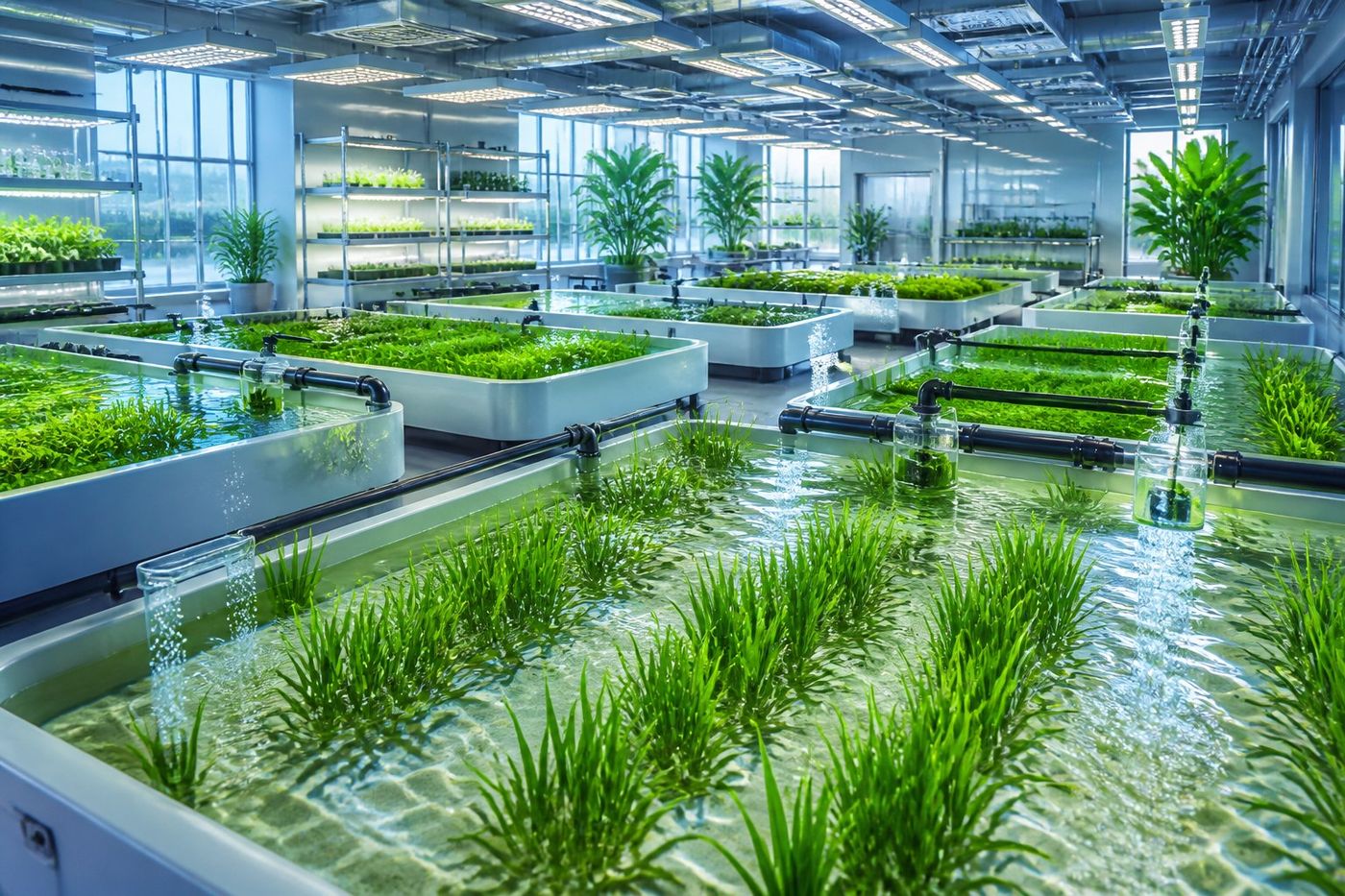
Aquatic Flora Propagation
High-tech planted propagation under injected CO2 — native macrophytes and seagrass nursery stock for restoration sites.
Quarantine & Triage
Mandatory isolation for all intake and rescue stock. Pathogen screening before any animal enters a culture zone.
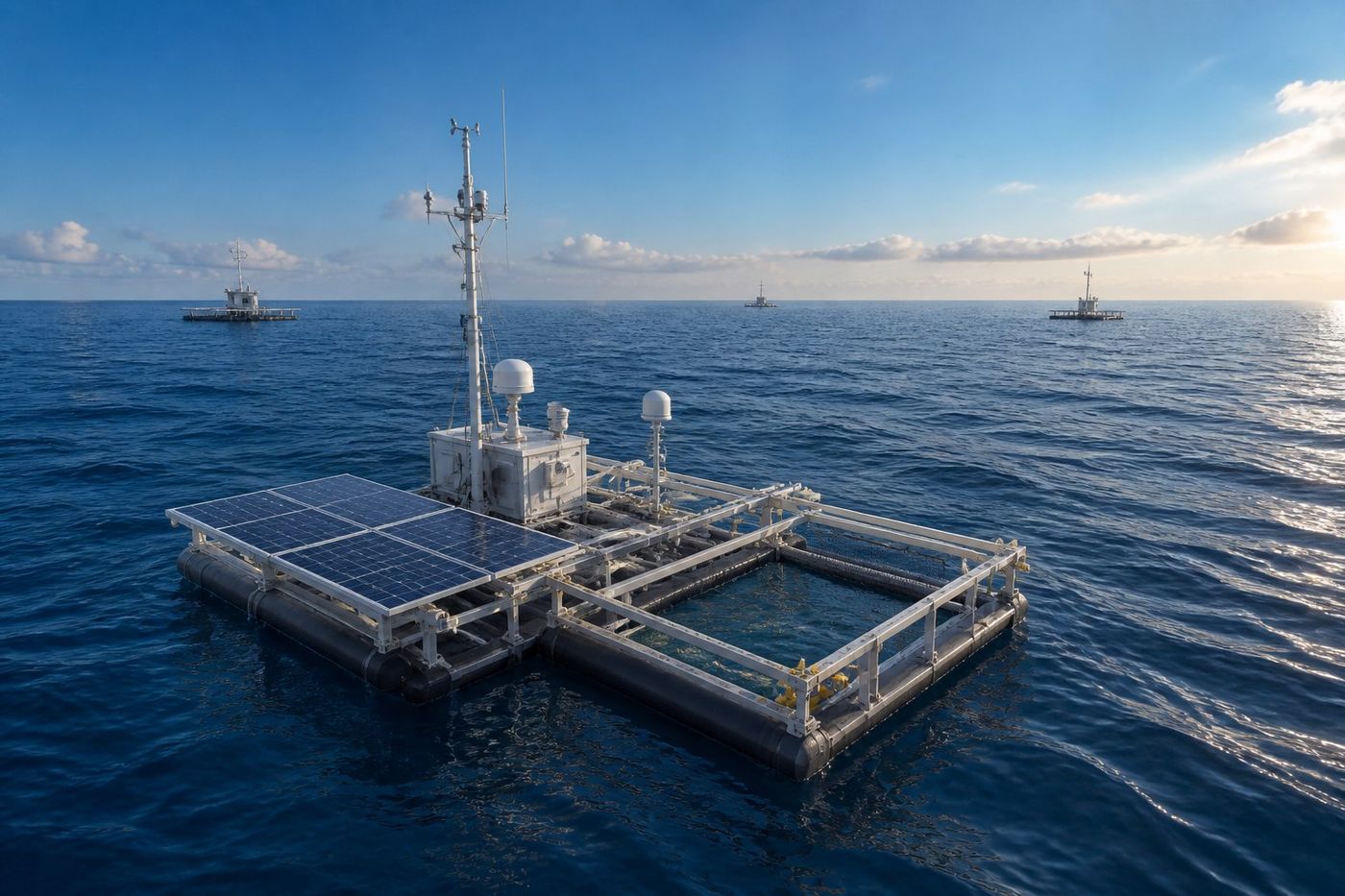
Gyre Stations
Pacific and Atlantic drift platforms — open-water grow-out and pre-release acclimation for rewilding pipelines.
Abyssal Holding
Sealed pressure vaults for deep and unverified stock. Disposition by Admiralty authority only.
The Broodstock Ark
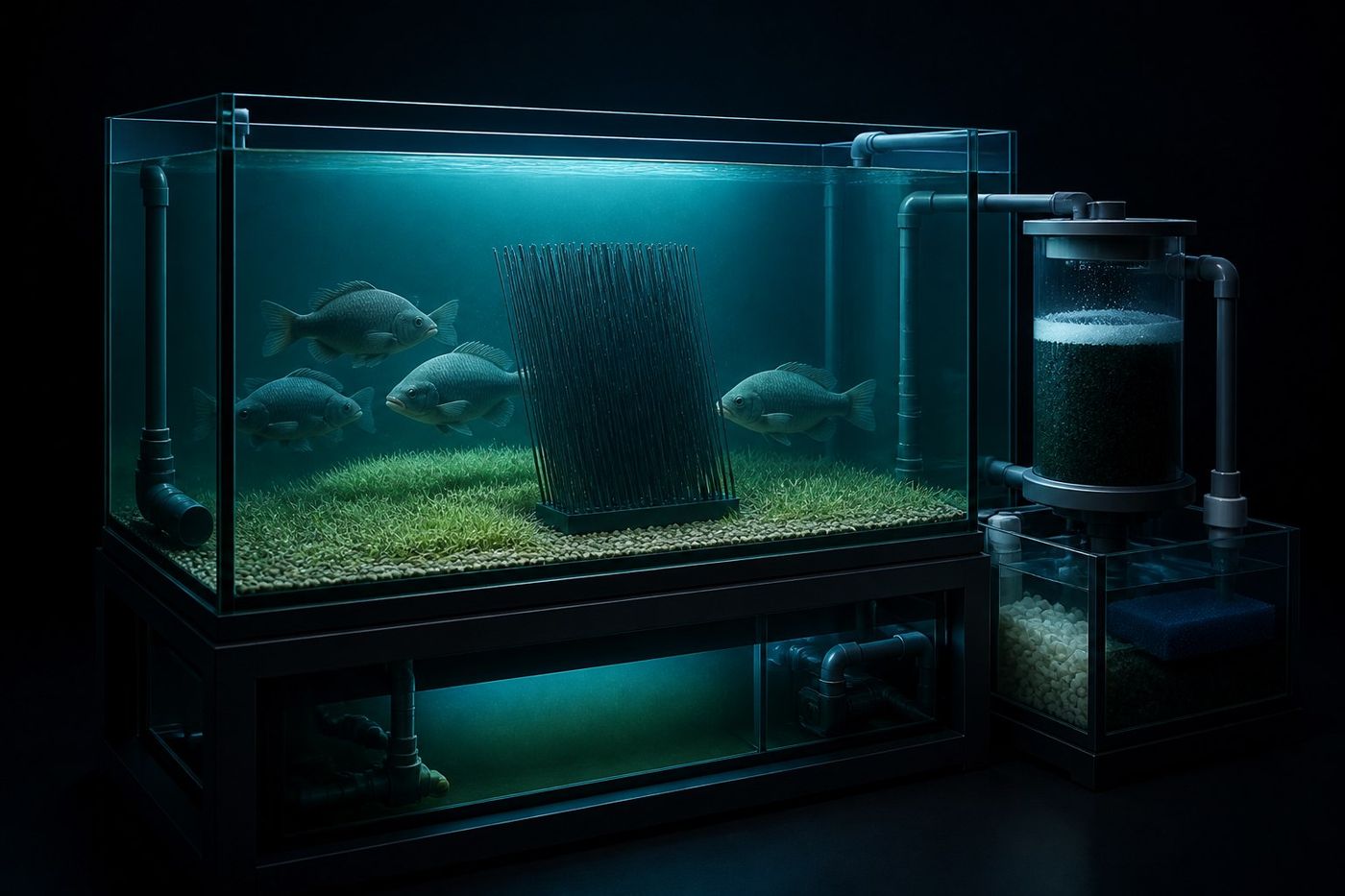
Every culture zone draws from the Ark — the curated register of breeding adults, paired and tracked for lineage, fecundity, and genetic distance. The Ark enforces wild-type integrity: no line is bred for the trade, only for return. Cryo-backups of each lineage are held in the Genome & Cryo-Bank.
Hatchery — Spawn → Fry → Rewilding
The hatchery runs a single continuous pipeline. A spawn event is logged at the rack, larvae are reared through fry stages on staged feeds, and survivors graduate to grow-out — freshwater juveniles to riverside soft-release pens, marine stock to the Gyre acclimation platforms. Release is conditional: water at the target site must clear the Registry's restoration thresholds first.
| Stage | What happens | Gate | State |
|---|---|---|---|
SPAWN | Spawn event confirmed; eggs collected and counted at the rack. | Viability > 70% | flowing |
LARVAE | Larval rearing on rotifer/Artemia staged feeds under stable chemistry. | Survival > 60% | flowing |
FRY | Fry weaned to formulated diet; sorted by size, screened for deformity. | Quarantine clear | flowing |
GROW-OUT | Juveniles conditioned to wild diet and current in grow-out / Gyre pens. | Fitness index | staging |
REWILD | Soft release to a restored site once water clears restoration thresholds. | Site water OK | site-gated |
Dynamic Water Changes
The Station does not change water on a schedule. Each zone's chemistry is held inside a target envelope by the AquaLink mesh; when a parameter drifts toward a soft limit, NEREID commands a metered exchange from the Water Prep reservoirs — exactly as much, exactly when needed. Calendar maintenance is reserved for filtration and mechanical service only.
Each cycle closes with the dawn anomaly sweep: at first light NEREID replays the overnight record for every zone, flags any excursion that self-corrected, and escalates anything that did not. The sweep report lands on the System Status board before shift change.
Water Prep & Reservoirs
Behind every zone stand the mixing reservoirs. Source water is filtered, conditioned, and blended to each system's recipe — hard or soft fresh, calibrated brackish, or natural-seawater-equivalent salt mix — then held ready so any zone can pull a change on demand without waiting for water to age.
Soft & Hard Lines
RO/DI base remineralised to two recipes — rift-lake hard and blackwater soft — buffered and aged in dedicated tanks.
Salinity Ramp Bank
Blended to held salinity setpoints for the Invertebrate Room, with staged ramps for acclimation.
Reef Salt Mix
Natural-seawater-equivalent mix, heated and matured, feeding the Reef Conservatory and Gyre acclimation.