Production Planning
The hatchery production plan across the Breeding Station: output targets per species line, the spawn → fry → grow-out → release pipeline with yields and timelines, capacity against rewilding demand, and the schedule that drives the floor. Feeds the restoration program and is backstopped by the Genome & Cryo-Bank.
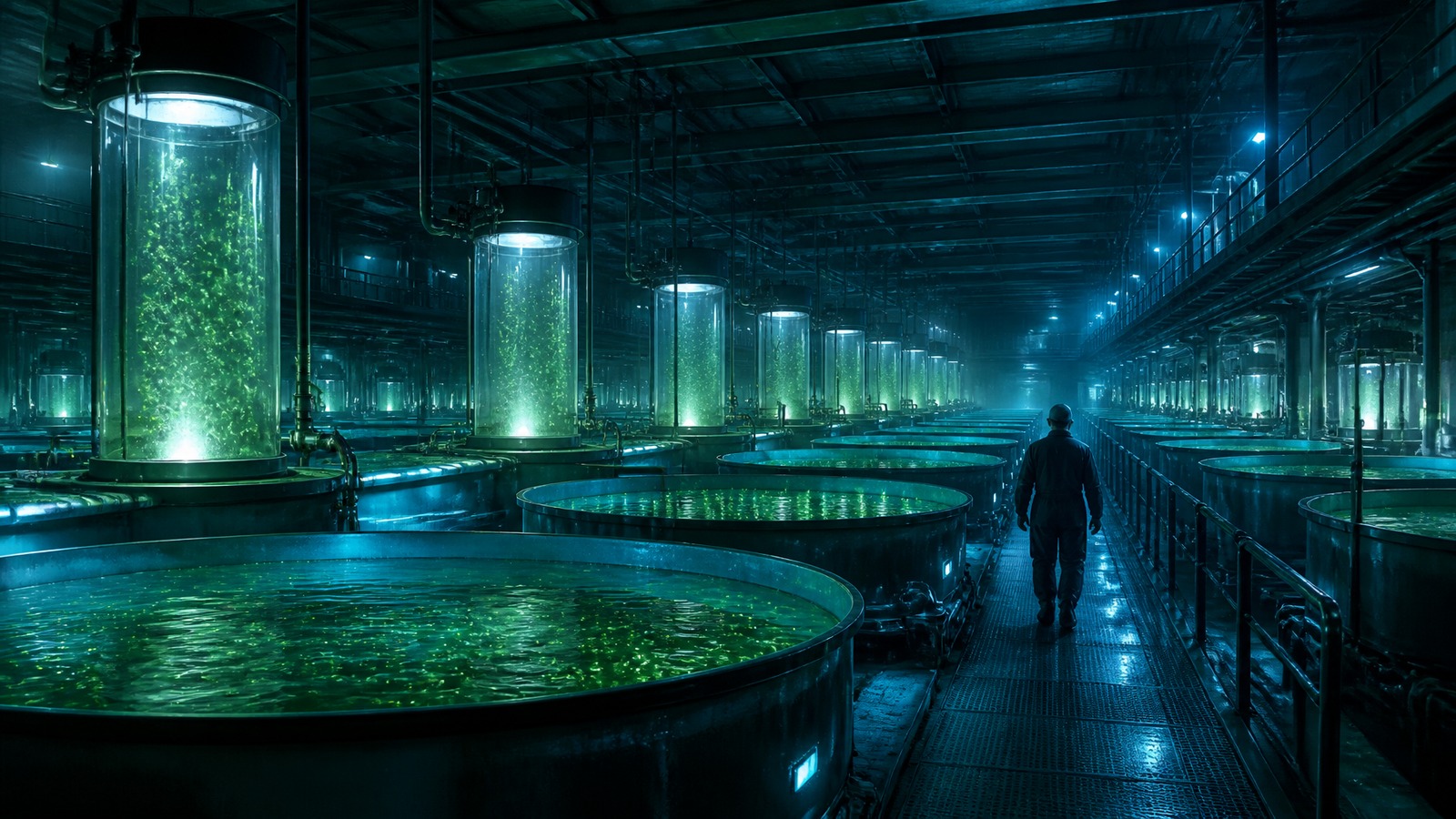
The plan in one line
Production is demand-pulled, not supply-pushed. The restoration program sets a rewilding quota per restored site; the plan back-calculates how many spawns each line must produce to clear that quota after expected losses at every stage. We breed to the quota and the wild-type standard — never beyond, never for the trade.
Cycle KPIs
Output targets — species lines
Per-line targets for the current cycle, set from the restoration quota and adjusted for each line's stage yields. Brackish and saltwater lines carry longer grow-out and therefore wider error bars on the release date.
| Line | Zone | Spawn target | Release target | Grow-out | Status |
|---|---|---|---|---|---|
| Rift-lake cichlid assurance | Cichlid Hall | 48 spawns | 3,200 | 14 wk | on plan |
| Spring goodeid lines | Livebearer Racks | continuous | 2,600 | 10 wk | on plan |
| Keystone grazer inverts | Invertebrate Room | 22 broods | 1,800 | 12 wk | behind |
| Clownfish & dottyback | Reef Conservatory | 30 spawns | 1,500 | 18 wk | on plan |
| Resilient coral genotypes | Reef Conservatory | fragging | 900 frags | 20 wk | staging |
| Seagrass nursery stock | Aquatic Flora Propagation | division | 1,000 units | 8 wk | on plan |
The production pipeline
One continuous line, five stages, four yield gates. Each stage multiplies the loss of the stage before it — which is why the plan is written from the release number backward, not the spawn number forward.
| Stage | What happens | Typical yield | Duration | Gate |
|---|---|---|---|---|
SPAWN | Conditioned broodstock spawn; eggs collected and counted at the rack. | viability > 70% | days | egg viability |
LARVAE | Larval rearing on staged live feeds under held chemistry — the fragile window. | survival > 60% | 2–4 wk | larval density & survival |
FRY | Weaning to formulated diet; sorting, deformity screen, quarantine clearance. | ~85% | 3–6 wk | quarantine clear |
GROW-OUT | Conditioning to wild diet and current in grow-out / Gyre pens. | ~90% | 8–20 wk | fitness index |
REWILD | Soft release to a restored site once site water clears restoration thresholds. | site-gated | release window | site water OK |
Capacity vs demand
The Station's culture capacity is finite; the rewilding quota is not always. When demand exceeds capacity, the plan prioritises by Registry conservation tier and by cryo-backup status — a line with secure cryo coverage can yield rack space to one without.
Production schedule
The rolling schedule that drives the floor. Release windows are gated on the target site clearing restoration thresholds — a window can slip even when the stock is ready.
| Window | Line | Stage due | Volume | Destination | State |
|---|---|---|---|---|---|
| Wk 12 | Spring goodeid | REWILD | 1,300 | restored spring system | scheduled |
| Wk 14 | Rift-lake cichlid | GROW-OUT → REWILD | 1,600 | soft-release pens | staging |
| Wk 16 | Seagrass nursery | REWILD | 1,000 | meadow restoration site | site-gated |
| Wk 18 | Clownfish | GROW-OUT | 1,500 | Gyre acclimation | scheduled |
| Wk 20 | Coral frags | GROW-OUT → outplant | 900 | restoration plots | site-gated |
Genetic discipline in production
Volume never overrides the wild-type standard. Pairings are drawn from the Broodstock Ark to maximise genetic distance; no line is bred for the trade, and every cohort is reconciled against the pedigree to hold broodstock diversity above its floor. Production is, before anything else, the controlled release of genetic insurance held in the cryo-bank.