AquaLink Mesh
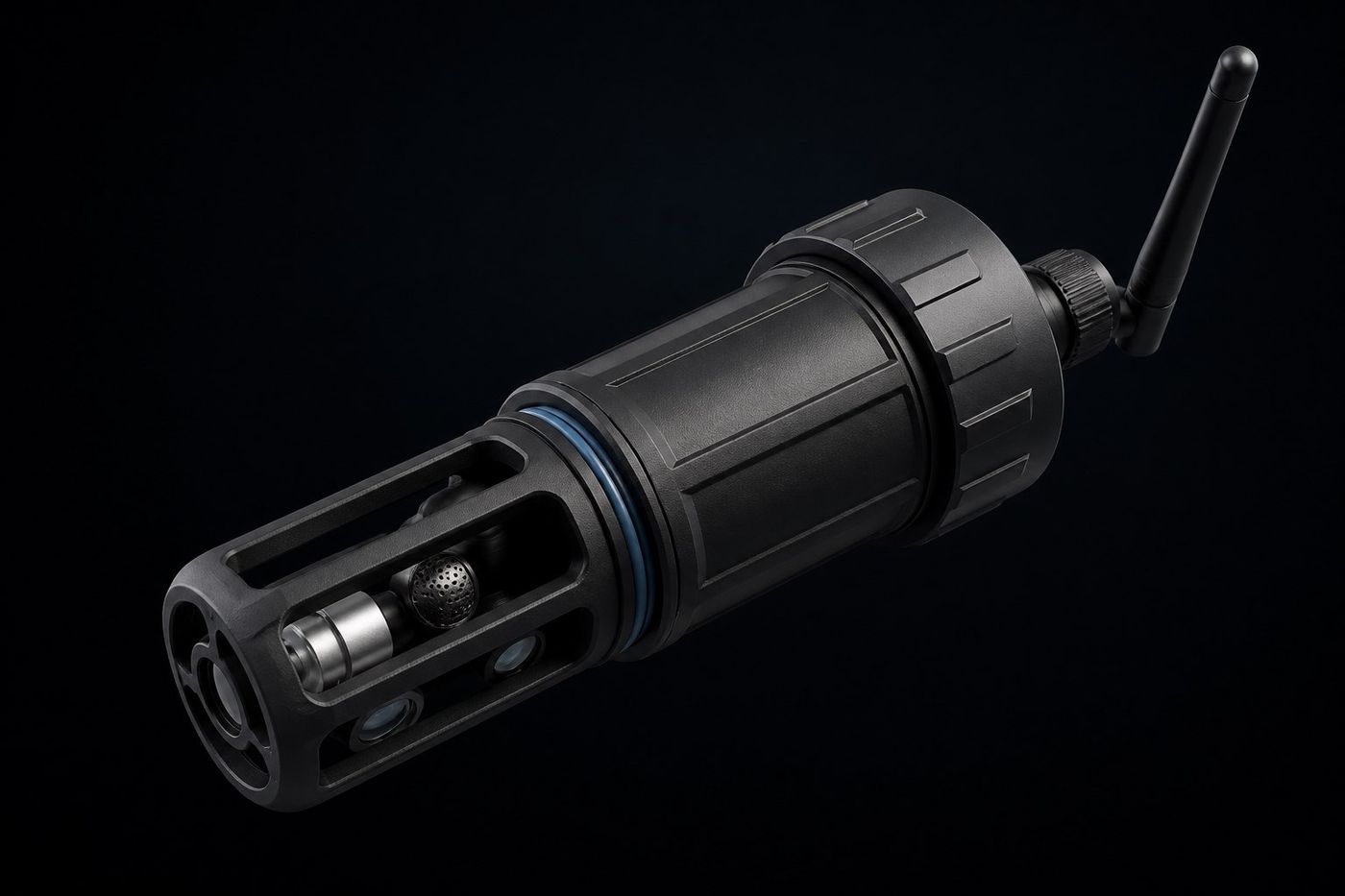
The distributed sensor fabric that drives every dynamic water change and feeds the command wall. Figures below stream live from the mesh.

Sensor Classes
Ten instrument classes report across the mesh. Each node carries a subset sized to its zone; ranges below are the operating envelopes NEREID holds.
| Class | Measures | Operating Range | Zones | State |
|---|---|---|---|---|
pH | Acidity / alkalinity | 6.0 – 8.4 | All | nominal |
DO | Dissolved oxygen | 5.5 – 9.0 mg/L | All | nominal |
SAL | Salinity | 0 – 38 ppt | Brackish · Reef · Gyre | nominal |
TEMP | Temperature | 12 – 28 °C | All | nominal |
TURB | Turbidity | 0.5 – 8 NTU | Reef · Gyre · Quarantine | watch |
TDS | Total dissolved solids | 50 – 1800 ppm | Freshwater · Brackish | nominal |
CO₂ | Dissolved carbon dioxide | 10 – 35 ppm | Flora Propagation | nominal |
PAR | Photosynthetic light | 50 – 400 µmol | Reef · Flora | nominal |
FLOW | Loop / pump flow rate | 0 – 1200 L/h | All loops | nominal |
LEVEL | Reservoir / sump level | 0 – 100% | Water Prep · All sumps | nominal |
Mesh Topology & Self-Healing
Nodes form a wireless mesh: every node relays for its neighbours, so there is no single point of failure. If a node drops, its traffic reroutes automatically along the next-best path and the gap is flagged — never silent. Degraded nodes keep buffering locally and backfill the record once the link returns.
No Single Point
Each reading reaches NEREID by at least two independent paths. Loss of one relay never blinds a zone.
Self-Healing Routes
Routing recomputes on the fly when a node drops; coverage holds while the node is serviced or replaced.
Buffer & Backfill
Offline nodes log locally and replay on reconnect — the record stays continuous through outages.
NEREID's Role
The mesh measures; NEREID decides. The AI ops layer fuses every channel against each zone's chemistry envelope and commands metered water changes from the reservoirs the instant a parameter trends out of band — sensor-driven, never calendar-driven. At dawn it runs the overnight anomaly sweep and posts the result to System Status.
Alarm Escalation Tiers
Not every reading is an alarm, and not every alarm is a crisis. The mesh sorts events into three escalation tiers, each with its own response and audience.
Informational
Routine events — spawn confirmations, completed water-change cycles, ROV recharges. Logged, no action required.
Warning
A parameter drifting toward a soft limit, a pressure transient, a single node in watch. NEREID acts automatically; the bridge is notified.
Critical
A hard-limit breach, a holding-integrity event, or a flagged hostile contact. Human sign-off required; escalates to the Admiralty.
| Tier | Trigger | Response | Notified |
|---|---|---|---|
| info | Routine logged event | Record only | NEREID log |
| warn | Soft-limit drift / single node watch | Auto water-change / reroute | Bridge watch |
| crit | Hard-limit breach / integrity event | Human sign-off · containment | Husbandry Lead → Admiralty |
Monitoring Subsystems
The mesh is one layer of a larger telemetry stack. Three subsystem specifications detail how data moves, how the sea is sensed beyond chemistry, and how events become action.
Mesh Data Fabric
The self-healing backbone carrying every byte from AquaLink and the fleet to NEREID — redundant paths, latency budgets, edge buffering, and evidence-grade signing.
AE-MON-0030Sensing Array
Multi-modal sensing beyond chemistry: hydroacoustics, hyperspectral reef imaging, eDNA, AIS/radar fusion, and satellite SST/chlorophyll.
AE-MON-0040Alarm Escalation
The tiered alert system — Info to Critical — with routing, NEREID auto-actions vs human sign-off, de-escalation, and the alarm catalogue.