Sensing Array
The multi-modal sensing suite that extends the AquaLink Mesh beyond point chemistry — hydroacoustic, optical, genetic, and orbital — all carried by the Mesh Data Fabric to NEREID.
1. Overview
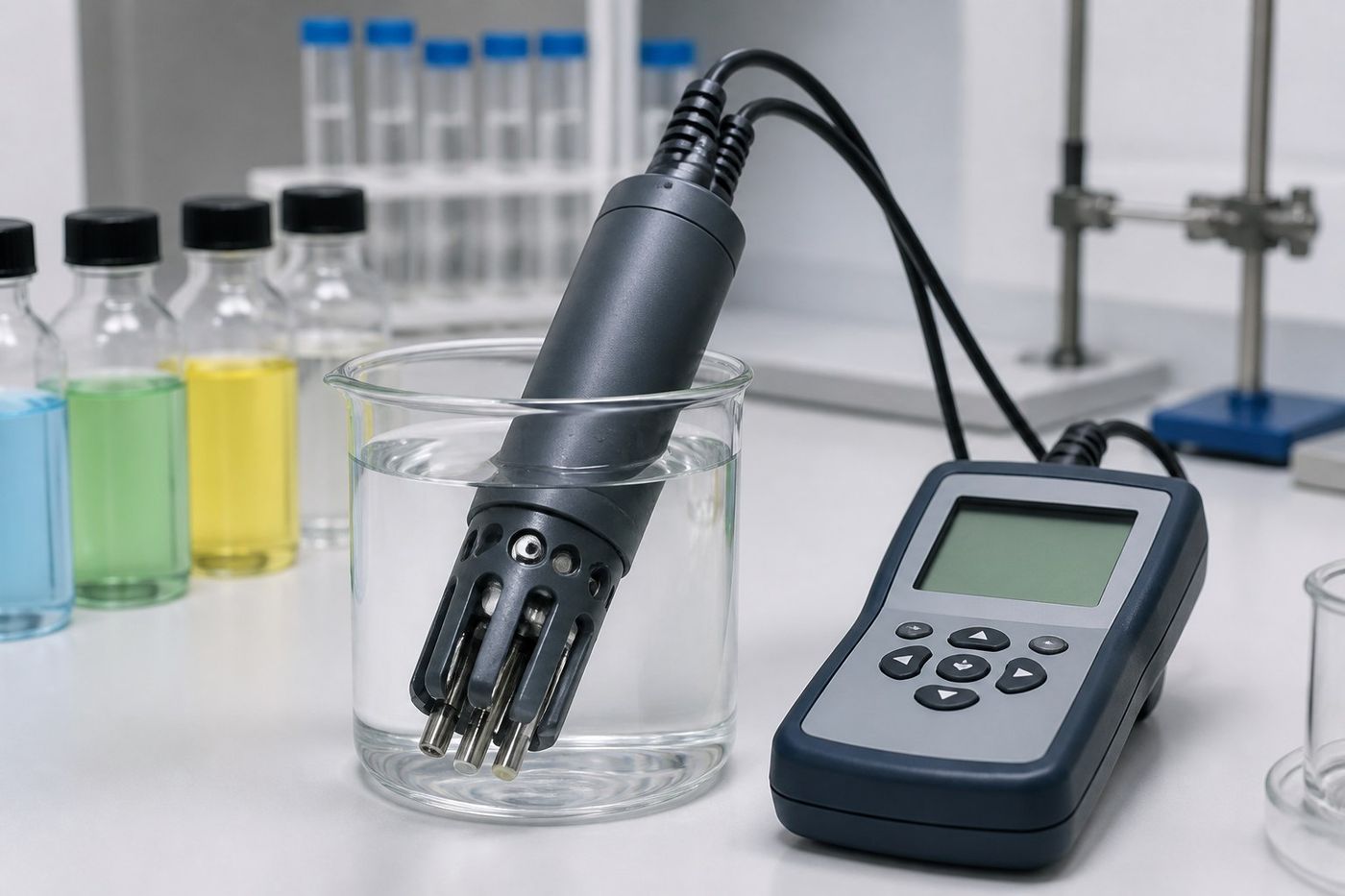
AquaLink chemistry tells us the state of the water; the Sensing Array tells us what moves through it and what threatens it. Five modalities run in parallel — hydroacoustic, optical/hyperspectral, genetic (eDNA), traffic fusion (AIS/radar), and satellite — each registered to a common time and grid by the Mesh Data Fabric, then fused by NEREID into a single situational picture spanning the Breeding Station and the gyre stations.
2. Sensor Modalities
| Modality | What It Detects | Platform | Cadence | Feeds |
|---|---|---|---|---|
| Passive hydroacoustic | Vessel signatures, cetacean vocalizations, ambient noise | Moored hydrophone arrays · drift buoys | Continuous | AE-MET-044 · AE-MET-047 |
| Active sonar | Hull contacts, seabed bathymetry, biomass shoals | 9 gated sonar heads (duty-limited) | On-task / scheduled | AE-MET-047 |
| Optical / hyperspectral | Reef photomosaic, coral bleaching, turbidity plumes | ROV & gantry imaging heads, drift cams | Full-grid ≤ 6 h | AE-MET-002 · AE-MET-003 · AE-MET-007 |
| eDNA samplers | Species presence, invasive arrivals, spawning events | Autonomous in-situ filtration cartridges | 4× daily / event-triggered | AE-MET-043 |
| AIS / radar fusion | Vessel tracks, AIS-gap (dark) targets, course anomalies | Shore radar, station AIS rx, sat-AIS | Continuous | AE-MET-019 · AE-MET-047 |
| Satellite SST / chlorophyll | Sea-surface temperature anomaly, bloom & productivity | Polar-orbit thermal/ocean-colour downlink | Per overpass (≈ 6 h) | AE-MET-012 · AE-MET-056 |
3. Hydroacoustics
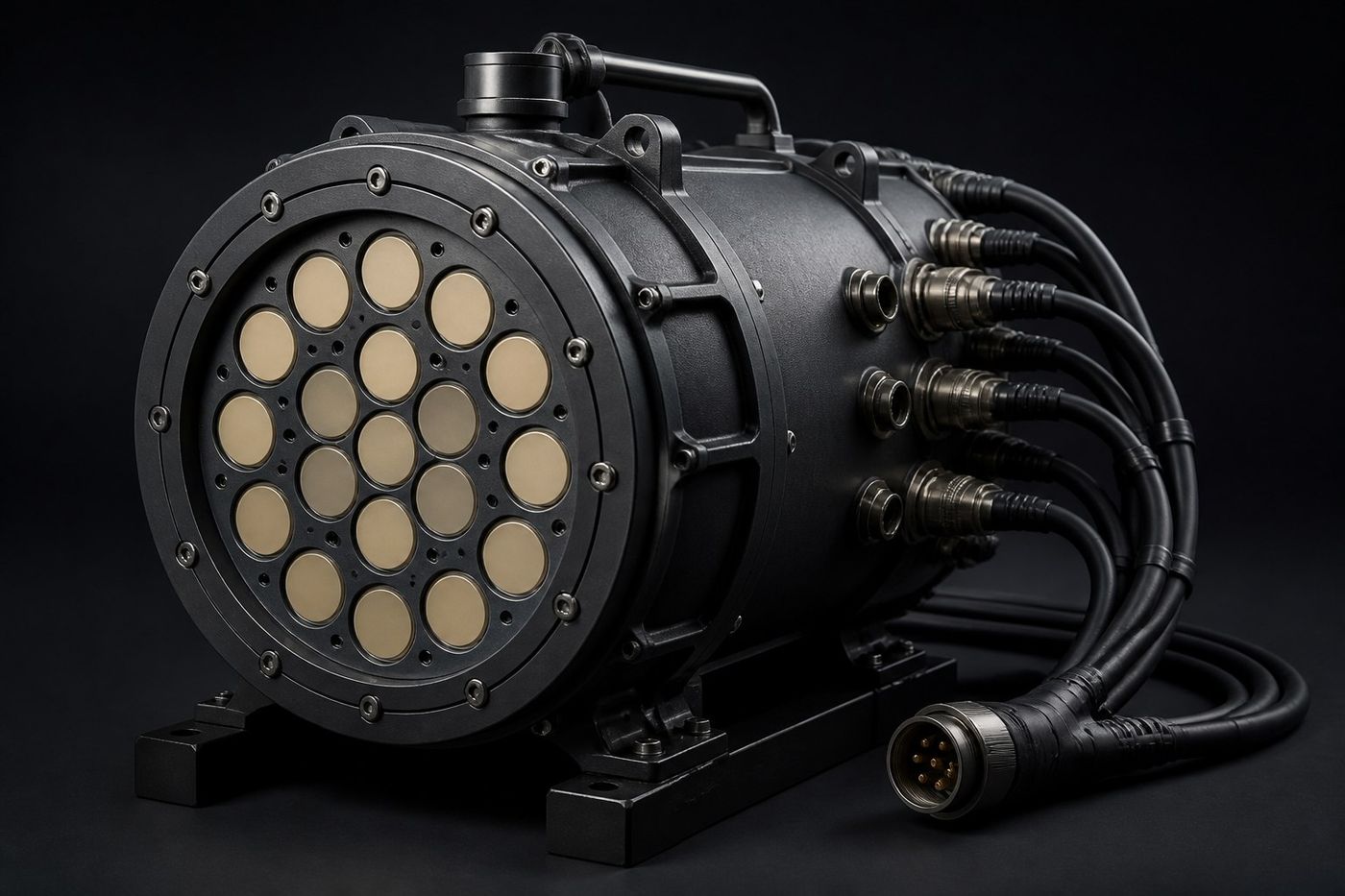
The passive array is the array that never blinks. 112 hydrophones across moored arrays and drift buoys listen continuously across 10 Hz – 180 kHz, classifying contacts in two registers: anthropogenic (engine cavitation, propeller blade-rate) and biological (cetacean calls, snapping-shrimp ambient). NEREID matches engine signatures against a known-hull library and flags any acoustic contact without a matching AIS track.
| Attribute | Specification |
|---|---|
| Passive bandwidth | 10 Hz – 180 kHz, 24-bit, 384 kS/s |
| Detection range (vessel) | Typ. 8 – 22 km, sea-state dependent |
| Cetacean classifier | Per-species call templates; logs whale presence for routing advisories |
| Active sonar duty | Gated & power-limited near marine-mammal detections (mitigation interlock) |
| Bearing accuracy | ±2° single array; sub-degree on multi-array triangulation |
4. Optical & Hyperspectral
ROV and gantry heads sweep push-broom hyperspectral lines (380–2500 nm) co-bored with broadband imagers to build a registered reef photomosaic every 6 hours. From the radiance cube NEREID derives live-cover, a bleaching index, and turbidity — early warning of a reef in stress before it whitens to the eye.
| Product | Derives | Alarm Band | Metric |
|---|---|---|---|
| Live reef cover | % hard-coral cover per quadrat | < 35% → watch | AE-MET-002 |
| Bleaching index | Spectral whitening 0–6 scale | ≥ 4 → critical | AE-MET-003 |
| Turbidity plume | Backscatter NTU mapping | > 8 NTU → watch | AE-MET-007 |
| Outplant survival | Per-cluster survival of restoration coral | declining trend → flag | AE-MET-043 |
5. eDNA Samplers
Autonomous in-situ samplers filter and preserve environmental DNA on a 4×-daily cadence, escalating to event-triggered sampling on a spawning cue or an unexpected acoustic contact. NEREID screens the genetic signal for target-species presence, invasive arrivals, and spawning confirmation — a census the camera and hydrophone cannot give. Cartridges are logged as evidence-grade and chain-of-custody preserved through the fabric.
6. AIS / Radar Fusion & Satellite
Shore radar, station AIS receivers, and sat-AIS are fused into a single track picture. The high-value product is the negative: a radar or acoustic contact with no corresponding AIS broadcast — a vessel running dark. These AIS-gap detections (AE-MET-019) are the front end of interdiction tasking. Satellite overpasses add the wide view: sea-surface-temperature anomaly (AE-MET-012) for bleaching forecast and chlorophyll-a (AE-MET-056) for productivity and bloom watch.
7. Fusion into NEREID
All five modalities register to common PTP time and grid, then NEREID cross-checks them: an acoustic contact without an AIS track, a bleaching index that disagrees with SST anomaly, an eDNA hit absent from the camera. Divergence beyond tolerance raises a sensor-trust flag and routes per Alarm Escalation (AE-MON-0040). Units and definitions live in Conservation Metrics.